
Turning around
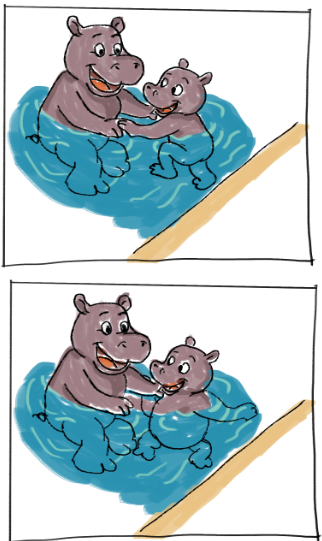
Guide the child to hold on to the edge of the pool wall with one hand and then the other hand.
Why We Teach Turning Around at Moovswim
Teaching young swimmers to turn around in the water is a deliberate and essential part of Moovswim’s safety-first approach. The skill is more than a movement pattern—it is a survival behaviour, a confidence builder, and a foundation for independent swimming.
1. A Critical Water-Safety Response
Accidental entries into the water can happen in unpredictable ways. A child may fall in facing the wrong direction or drift away from the pool wall. Teaching them to turn back toward safety ensures they instinctively orient themselves to the nearest support point—whether that is the wall, a platform, or an adult.
2. Building Independent Problem-Solving
Turning around trains spatial awareness and decision-making. The child learns to:
Recognise where safety is located
Rotate their body efficiently
Act without waiting for adult instruction
This supports self-rescue readiness, which is one of Moovswim’s core teaching outcomes.
3. Supporting the “Fall In → Turn → Grab” Sequence
The turn completes the essential survival chain:
Entry or fall-in
Turn back
Swim or kick back to the edge
Hold and exit
Without the turn, the sequence is ineffective. With it, even a very young child can return to safety quickly.
4. Developing Balanced Motor Skills
Turning requires coordinated actions:
Head movement
Shoulder rotation
Core engagement
Kick initiation
These movements build the motor patterns needed later for rolling, directional control, and proper body rotation in freestyle.
5. Building Confidence Without Panic
Children who practise turning around regularly learn that they can control their situation in the water. This reduces panic, supports calm reactions, and builds trust in their own abilities—key elements of Moovswim’s “every baby can swim” philosophy.
6. Smooth Progression to Advanced Skills
Turning is foundational for:
Side returns
U-turns
Safe pool entry and exit routines
Directional changes during independent swimming
Preparing for backfloat, submersion, and transitions
It is a building block, not an isolated technique.
How We Teach Turning Around at Moovswim
Teaching a child to turn around in the water is a structured progression that develops spatial awareness, confidence, and the ability to return to safety independently. At Moovswim, this skill is introduced gradually to ensure that both parent and child understand each step and feel secure throughout the process.
1. Starting Position: Sideways at the Pool Edge
Initially, the parent stands at the edge of the pool holding the child, with their body positioned sideways to the pool. This orientation allows the child to face the parent while being close to the pool edge.
Parents are encouraged to describe the pool edge simply as “the wall” for clarity and consistency. Throughout the exercise, parents should verbalise the cue “Hold the wall.”
2. Introducing the 90-Degree Turn
The skill begins with a gentle introduction to rotation. The first step involves gradually familiarising the child with rotating 90 degrees, eventually progressing to a full 180-degree turn.
3. Guiding the Child’s Hands to the Wall
The turning sequence is taught through a simple, repeatable pattern:
Step A: Right Hand to the Wall
The parent begins by holding the child’s right hand and assisting them in reaching for and grasping the pool edge.
The child remains upright in the water
The right hand is securely holding the wall
The parent supports the child while maintaining calm, steady guidance
Step B: Left Hand to the Wall
Next, the parent takes the child’s left hand and guides it to the wall so that the child floats upright while holding on with the left hand.
This helps the child become familiar with switching sides and maintaining balance.
Step C: Encouraging Independent Support
In the next stage, the parent again positions the child’s right hand on the wall, but this time refrains from holding the left hand.
The child practises supporting themselves independently
The parent stays close, maintaining safety and confidence
The focus is on allowing the child to feel their own strength and stability
4. Building Confidence at the Wall
Ultimately, the aim is for the child to become comfortable and confident holding onto the wall without assistance.
This establishes a reliable 90-degree turn and prepares the child for more advanced movement patterns.
5. Progressing to the 180-Degree (Full) Turn
Once the child is proficient in the upright 90-degree turn, the next stage is to practise a fully submerged rotation, where the child turns their entire body underwater to re-orientate toward the wall.
This step is taught only when:
The child is confident holding the wall
They understand the cue “Hold the wall”
They can rotate smoothly with the parent’s support
The submerged turn becomes part of the essential survival sequence: fall in → turn → swim back → hold the wall.
