Learning to breathe
Why We Teach Breathing at Moovswim?
Teaching breathing at Moovswim is a purposeful, structured process designed to help children develop confidence, calmness, and control in the water. Breathing is one of the most important foundations of aquatic competence. When children learn how to manage breath in the water, they feel safe, relaxed, and empowered to explore movement, buoyancy, and propulsion without fear. At Moovswim, breathing is not taught as an isolated skill; it is integrated into every stage of water familiarisation, submersion, floating, paddling, and independent swimming.
Breathing skills help children understand that water is not something to fear but something they can respond to with control. When a child learns to inhale calmly, hold breath appropriately, and exhale in the water, they gain the ability to stay composed in different aquatic situations. This reduces anxiety, prevents panic responses, and promotes safe reactions during accidental immersions. By establishing breathing control early, children develop emotional stability in the water and are better prepared to progress to more advanced swimming skills.
Teaching breathing at Moovswim also supports physical development. Coordinated breathing improves body alignment, rhythm, and efficiency in movement. Children learn how to maintain a steady breathing rhythm while floating, kicking, or moving forward, which contributes to smoother, more energy-efficient swimming. Proper breathing helps prevent breath-holding stress, reduces fatigue, and encourages relaxed musculature, making the learning experience enjoyable rather than overwhelming.
Safety is another key reason breathing is prioritised. Children who understand breath management are better equipped to cope if they accidentally submerge or swallow water. Through guided, gentle, and developmentally appropriate instruction, they learn to respond with controlled exhalation rather than panic. This skill plays an essential role in drowning prevention and builds the foundation for lifelong water safety habits.
Finally, Moovswim’s breathing approach strengthens trust between caregiver, child, and instructor. Breathing drills are presented positively, using clear cues, repetition, reassurance, and playful engagement to ensure children feel supported. This nurturing environment allows children to practise breathing confidently and progressively, setting them on a path toward strong swimming ability, resilience, and a lasting love for the water.
How to Teach Breathing at Moovswim?
At Moovswim, breathing is taught progressively, gently, and purposefully so that children learn to stay calm, in control, and confident in the water. Breathing is not treated as a single exercise but as a skill that is gradually developed through positive conditioning, clear cues, repetition, and trust-building between caregiver, child, and instructor.
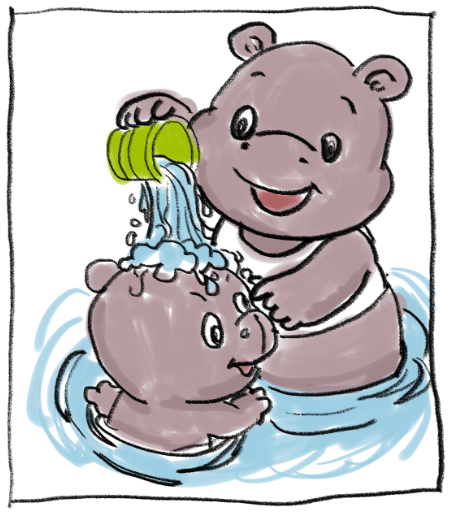
For infants and young children, the learning journey begins with water-familiarisation and breath conditioning. This helps them understand the natural reflex of breath control when water touches the face. As part of this gentle conditioning, for infant and children, Moovswim will condition by pouring water using a cup-filled water over the head in which the water runs on the face. This is done gradually, with reassurance and verbal cues, so the child begins to associate water contact with calm breath control rather than fear. The exercise mimics natural splashes and prepares children for submersion and other aquatic movements safely.
Clear verbal cues are used consistently to help children anticipate breath events. Cueing such as calmly saying the child’s name, followed by “Ready… Go…” helps children predict when water will come and instinctively prepare by closing the mouth and controlling breath. This promotes confidence, reduces anxiety, and builds trust. Over time, children learn to respond automatically to breath cues, which supports both safety and skill development. This is similar to what was taught in submersion.
As children progress, they are gently guided to practise exhaling in the water through controlled bubble blowing. This phase teaches them not to hold their breath excessively, but to breathe in above the water and steadily release air while submerged. Blowing bubbles encourages relaxation, supports buoyancy control, and helps children remain composed if their face enters the water unexpectedly. Breathing drills are incorporated naturally into floating, paddling, and movement exercises so that breathing becomes rhythmic and intuitive rather than forced.
Safety and reassurance are at the heart of every step. All breathing activities are introduced only when the child is emotionally ready, and caregivers are guided to remain calm, supportive, and attentive. Through this structured, nurturing, and confidence-building approach, Moovswim ensures children develop healthy breath control, resilience in the water, and a strong foundation for independent, competent swimming.
